Weak operational pattern
Warehouse teams, finance teams, and operations maintain different movement assumptions without one connected compliance process.

Excise Tax Records, Controls, and Filing Discipline
Excise Tax compliance in the UAE becomes operational long before a filing deadline arrives. Product classification, warehouse movement, stock visibility, declarations, production records, import chronology, internal approvals, and tax calculations all affect whether the business can maintain a defensible compliance position over time.

Direct answer:
Excise Tax Compliance UAE support helps businesses strengthen records, declarations, product classification, stock tracking, tax calculations, filing timelines, internal controls, and compliance discipline connected to excise goods activity.
Excise Tax compliance depends on connected operational visibility across warehouse activity, accounting records, declarations, and tax calculations.
NAMC supports excise compliance through accounting review, records analysis, internal-control visibility, filing discipline, and documentation readiness.
The support remains advisory-led and compliance-safe without unsupported enforcement or authority claims.
In practice
Excise Tax compliance requires more than filing returns on time. The business needs a consistent process connecting product classification, import activity, warehouse movement, production records, stock balances, tax calculations, declarations, and supporting evidence.
The pressure often appears after operations scale. More products enter the supply chain. More warehouses become involved. Internal departments maintain different movement schedules. One team updates quantities while another continues using older assumptions.
A business may believe the compliance process is stable until chronology testing starts. Then older assumptions begin affecting later periods quietly. The warehouse looked controlled until the movement logic was compared against declarations and accounting entries.
The issue may begin in operations long before finance sees the exposure.
Compliance pressure usually begins when warehouse activity, declarations, calculations, and accounting records evolve separately instead of through one controlled operational process.
Leadership decisions around inventory, imports, pricing, production, and release timing can create tax exposure before finance teams identify the full compliance impact.
NAMC reviews excise goods activity, declaration structure, stock movement visibility, calculation logic, record quality, filing chronology, and internal-control consistency.
Service areas

Excise calculations depend on whether products are classified consistently across invoices, customs records, warehouse systems, and declarations.
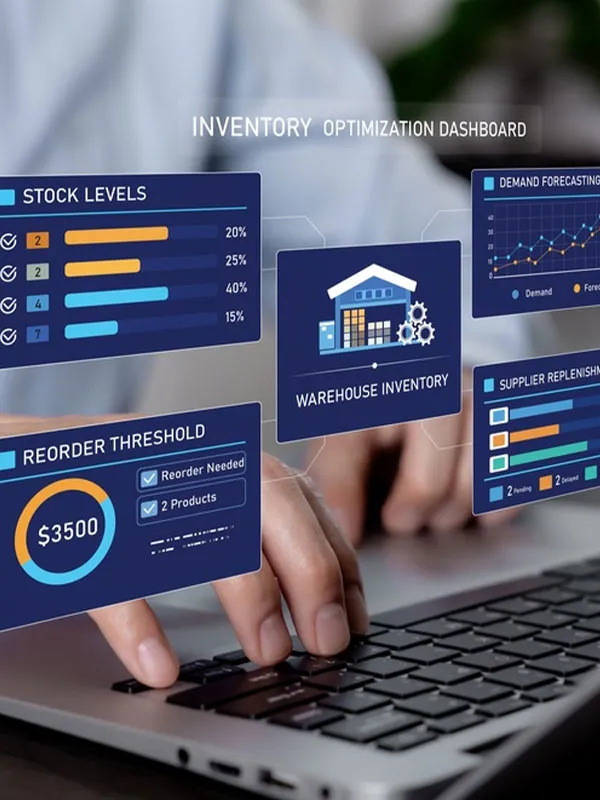
Opening balances, transfers, releases, production quantities, and closing balances should align across operational and accounting records.

Compliance discipline depends on whether declarations are prepared from reviewed records rather than from deadline pressure alone.

Shipment records, customs declarations, quantities, and warehouse entries should connect clearly to filing periods.

Calculation schedules should remain traceable to product movement, stock quantities, and supporting evidence.

Internal controls help management understand where records are supported, where assumptions are repeated, and where escalation pressure may develop later.
Excise calculations depend on whether products are classified consistently across invoices, customs records, warehouse systems, and declarations.
Opening balances, transfers, releases, production quantities, and closing balances should align across operational and accounting records.
Compliance discipline depends on whether declarations are prepared from reviewed records rather than from deadline pressure alone.
Shipment records, customs declarations, quantities, and warehouse entries should connect clearly to filing periods.
Calculation schedules should remain traceable to product movement, stock quantities, and supporting evidence.
Internal controls help management understand where records are supported, where assumptions are repeated, and where escalation pressure may develop later.
Risk view
An excise compliance issue may first appear in one declaration or one warehouse reconciliation. The weakness behind it often spreads further.
A stock assumption repeated across periods can affect later calculations. Product classification may remain unchanged even when supplier descriptions evolve. Warehouse movement records may not match accounting movement. Payment chronology may not align with declaration history.
This is where executive concern grows. Management expected a compliance task. Instead, the review begins exposing operational dependency chains across inventory, declarations, warehouse controls, and filing chronology.
One unsupported movement record can quietly affect later declarations, later calculations, and future-period reconciliations without appearing immediately.
Pricing pressure often exposes tax weaknesses late.
The compliance issue may not begin where the declaration problem appeared. Earlier operational assumptions can contaminate later filing periods quietly if records are not reviewed together.
In practice
Warehouse records can look controlled when reviewed in isolation. Accounting records can also look controlled when reviewed separately. The problem appears when both systems are placed on the same timeline.
A receipt date may not match the import release sequence. A transfer may appear in warehouse records but not in the accounting schedule. Production output may be updated after the declaration file was already prepared. A stock adjustment may correct the operational balance while leaving the tax calculation exposed.
That is why excise compliance must connect movement visibility with declaration visibility. If the business cannot explain how goods moved, it may struggle to explain why the declaration figure is correct.
The movement looked consistent until the warehouse chronology was tested.
Do opening stock and closing stock reconcile?
Do warehouse transfers match accounting entries?
Do import records match stock receipt dates?
Are damaged, lost, or destroyed goods documented?
Do production records match release records?
Are stock adjustments approved and explained?
Comparison
Excise compliance becomes more complex when goods move through designated zones, customs processes, bonded-style storage environments, or multiple warehouse locations. The business may have one operational view of goods and a different tax-compliance view of the same movement. Customs-document synchronization matters because import records often carry product descriptions, quantities, dates, and references that need to match internal records. If those details do not align, later declarations can look unsupported even when the business believed the underlying movement was valid. Import-release sequencing also matters. A shipment can arrive, clear, move into storage, transfer internally, or release into the market at different points. Each step may affect the record trail. If the chronology breaks, management may see a declaration figure without understanding the movement logic behind it.
Common Record Issue
Stock location, transfer timing, or release status is unclear.
Compliance Review Focus
Review location records, movement approvals, and supporting chronology.
Common Record Issue
Product descriptions or quantities do not match accounting schedules.
Compliance Review Focus
Synchronize customs data with product records and declaration inputs.
Common Record Issue
Goods arrival, clearance, and warehouse receipt dates do not align.
Compliance Review Focus
Map import-release sequencing against stock movement and tax periods.
Common Record Issue
Transfers are recorded operationally but not reflected clearly in finance records.
Compliance Review Focus
Reconcile movement schedules against accounting evidence.
Common Record Issue
Corrections are made without enough explanation or approval trail.
Compliance Review Focus
Document adjustment reason, timing, approval, and tax impact.
How it works
Business operations, products, imports, warehouse movement, production activity, and declarations are reviewed to understand compliance exposure.
Warehouse schedules, accounting records, declarations, customs documents, and movement chronology are checked for consistency.
Tax calculations, classification assumptions, quantity tracking, and supporting schedules are reviewed against source records.
Internal approval flow, filing responsibility, record ownership, and reconciliation discipline are reviewed for operational weakness.
NAMC helps management understand where declarations remain supported, where records require cleanup, and which operational controls need improvement before future pressure increases.
Comparison
Warehouse teams, finance teams, and operations maintain different movement assumptions without one connected compliance process.
Declarations, stock movement, calculations, accounting records, and warehouse chronology are reviewed together before filing pressure increases.
Leadership understands where exposure exists, where assumptions repeat across periods, and which internal controls require strengthening.
Weak Compliance Pattern
Classification depends on unsupported assumptions or supplier wording.
Structured Compliance Discipline
Classification logic is reviewed against operational and documentary evidence.
Weak Compliance Pattern
Warehouse balances and accounting balances do not reconcile consistently.
Structured Compliance Discipline
Movement chronology and stock balances are reviewed before declarations.
Weak Compliance Pattern
Returns are prepared under deadline pressure without deeper testing.
Structured Compliance Discipline
Declarations are prepared from reviewed operational evidence.
Weak Compliance Pattern
Calculation schedules cannot be traced clearly to source movement.
Structured Compliance Discipline
Tax calculations remain connected to quantity records and documentation.
Weak Compliance Pattern
Departments maintain separate compliance assumptions.
Structured Compliance Discipline
Management visibility improves through clearer operational accountability.
In practice
ERP systems can create confidence too early. If item codes, warehouse balances, customs references, stock adjustments, and accounting ledgers are not synchronized, the system may show a clean balance while the compliance evidence remains incomplete.
Historical movement reconstruction becomes necessary when the current declaration depends on older stock movements that were not recorded consistently. Finance teams may need to rebuild import receipts, transfers, production output, stock losses, and releases from several sources.
Strong compliance review does not assume the ERP is wrong or right. It tests whether ERP data matches the source evidence that would be needed during review.
The declaration may appear balanced before operational records are rebuilt.
Product codes do not match customs descriptions
Warehouse balances update after finance extracts data
Stock adjustments are entered without explanation
Production data sits outside accounting workflows
Transfers appear in operations but not in tax schedules
Closing balances rely on untested historical assumptions
Comparison
Reactive reconciliation starts after pressure appears. Controlled reconciliation happens before declaration, audit, or query pressure forces the business to rebuild the file.
Reactive Reconciliation
Records are rebuilt after deadline pressure or authority queries.
Controlled Reconciliation
Records are reviewed during normal compliance cycles.
Reactive Reconciliation
Movement is reconstructed from scattered documents.
Controlled Reconciliation
Movement is tracked and reconciled through a defined method.
Reactive Reconciliation
Responsibility becomes unclear once pressure rises.
Controlled Reconciliation
Ownership sits across finance, warehouse, operations, and management.
Reactive Reconciliation
Leadership receives late warnings after weaknesses appear.
Controlled Reconciliation
Leadership sees repeated assumptions and unresolved gaps earlier.
Reactive Reconciliation
Older errors continue affecting later declarations quietly.
Controlled Reconciliation
Carry-forward risks are identified before they contaminate future periods.
Risk view
Excise compliance weakness is not only a tax department problem. It can affect governance visibility, reporting confidence, external audit readiness, financing confidence, pricing decisions, shareholder visibility, and accountability between departments.
When movement chronology is weak, leadership may not know whether the issue is isolated or repeated. When product classification is unsupported, pricing and margin decisions may rest on an unstable tax assumption. When warehouse and accounting records diverge, management may approve declarations without seeing the full operational risk.
A stronger compliance position gives leadership a clearer view of what is supported, what is assumed, what has been repeated, and what needs correction before future declarations inherit the same weakness.
Visibility problems often begin long before management sees the exposure.
Board-level uncertainty around compliance exposure
Weak reporting confidence during external review
Pricing decisions based on incomplete tax visibility
Internal accountability gaps between departments
Audit-readiness pressure from unsupported records
Future filing contamination from old assumptions
Delayed escalation of stock movement issues
Comparison
VAT controls and excise controls overlap through accounting records, but they are not the same discipline. VAT often tests invoice-level treatment. Excise tests product classification, movement chronology, quantity control, and declaration dependency.
VAT Control Focus
Tax invoices, credit notes, VAT ledgers, input/output tax schedules.
Excise Control Focus
Product classification, warehouse movement, customs records, stock balances, declaration schedules.
VAT Control Focus
Sales and purchase records connect to VAT return treatment.
Excise Control Focus
Goods movement and quantity tracking connect to excise declarations.
VAT Control Focus
Missing invoices or unreconciled VAT ledgers.
Excise Control Focus
Unsupported movement chronology or repeated stock assumptions.
VAT Control Focus
Can the tax treatment be proven from invoice evidence?
Excise Control Focus
Can the declaration be proven from movement and stock evidence?
In practice
Excise Tax compliance becomes harder when internal controls depend on informal coordination. One department may track imports differently from warehouse movement. Another may update product descriptions without reviewing classification implications.
Those differences may appear small initially. Then the filing timeline compresses. Finance teams rebuild schedules under deadline pressure. Management discovers that declarations depend on records that were never reconciled properly.
The strongest compliance structure creates clear ownership over movement chronology, stock visibility, declaration preparation, and supporting evidence retention.
Some explanations sound stronger before the records are tested.
Warehouse movement schedules
Import and customs records
Product classification support
Production and release data
Opening and closing stock balances
Excise calculation schedules
Declaration preparation process
Internal approval workflow
Record retention discipline
Prior filing adjustments
Service areas

Movement schedules remain disconnected from accounting balances and declaration quantities.

The same unsupported product logic continues across multiple filing periods.

Calculations are reviewed only after declaration deadlines become urgent.

Departments assume other teams are maintaining the supporting records.

Import timing, release movement, and stock adjustments cannot be explained clearly later.

Older unsupported assumptions continue affecting later declarations quietly.
Movement schedules remain disconnected from accounting balances and declaration quantities.
The same unsupported product logic continues across multiple filing periods.
Calculations are reviewed only after declaration deadlines become urgent.
Departments assume other teams are maintaining the supporting records.
Import timing, release movement, and stock adjustments cannot be explained clearly later.
Older unsupported assumptions continue affecting later declarations quietly.
Keep exploring
Excise Tax UAE support for registration, records, calculations, returns, documentation, compliance review, and FTA readiness.
Explore serviceExcise Tax Registration UAE support for taxable goods review, document preparation, application readiness, and compliance guidance.
Explore serviceExcise Tax Consultant UAE support for product classification, taxable goods exposure, pricing impact, filing discipline, and FTA readiness.
Explore serviceExcise Tax Return Filing UAE support for return data review, calculations, records, documentation, and filing accuracy.
Explore serviceFAQ
 Get in touch
info@namc.co.ae
Working hours
Sunday to Thursday 09:00 AM - 07:00 PM Friday & Saturday - Closed
Book your free session with our team and discover solutions crafted for your business.